Extended support for the Windows XP ended more than two years ago on April 8, 2014 which means that feature, fix or security updates are no longer released for devices running the system.

May 20, 2016





Extended support for the Windows XP ended more than two years ago on April 8, 2014 which means that feature, fix or security updates are no longer released for devices running the system.
As most enterprise IT leaders know, transitioning IT staff to a cloud-based service delivery model is often more challenging than transitioning the infrastructure itself.
A collaborative, vertically-oriented IT organizational structure is crucial to the success of any cloud infrastructure, and yet the advice enterprises receive—usually some variation of “break down silos”—is not especially useful in an organization with hundreds or even thousands of IT employees. A highly functional IT structure is even more difficult to achieve when the enterprise has a mix of public, private, and on-premises environments.

This is a big week for Oracle’s cloud angle, the latest being a new family of offerings that provide CIOs with choices for enterprise software deployment, and what Oracle calls an easy path for moving applications to the cloud.
This new family of offerings is referred to as Oracle Cloud at Customer. It’s designed to make it easier for organizations to move to the cloud, gaining the benefits of the Oracle Public Cloud Services from the Oracle Cloud or their own datacenter.

Every business and industry is being transformed by the cloud – and as cloud speed, scale and agility continue to increase, so too does what’s possible using cloud services. Imagine a dairy farmer who can improve his cows’ milk production by hooking them up to monitoring sensors. Or a hospital that can auto-monitor hygiene practices to make it a safer place. Or a car that can alert you to traffic and save you hassle on the way to work. All this is happening today, thanks to exponentially increasing amounts of data, and new ways to analyze this data for better business insights and connect it to a growing number of devices.

A digital signature (not to be confused with a digital certificate) is a mathematical technique used to validate the authenticity and integrity of a message, software or digital document. The digital equivalent of a handwritten signature or stamped seal, but offering far more inherent security, a digital signature is intended to solve the problem of tampering and impersonation in digital communications.

Cloud security risks are rising, with attacks growing at 45% year-on-year globally, according to cloud security firm Alert Logic. In the next five years, US$2 billion will be spent by enterprises to shore up their cloud defences, according to Forrester Research.
First time cloud users can be most at risk, simply because of unfamiliarity with the new environment and the added burden of having to grapple with a new way of managing users, data and security.
Here are five security must-do’s before taking the plunge.
We’ve seen it many times before; first generation technology products creating huge untapped marketplaces but eventually being bettered either by their originators or competitors. Think VCRs and then CDRs, both were usurped by DVRs and streaming, or the first mobile phones becoming the smartphones of today – the list goes on.
Cloud computing is no exception. The original ‘product’ concept remains very much in vogue but the technology and infrastructure holding it together keeps on getting faster, more functional, more reliable – put simply, better. Growing user and cloud service provider maturity is seeing to that. After 10 years of cloud, the industry and users have learned valuable lessons on what does and doesn’t work. They still like it and want much more of it but there’s no longer room for a one size fits all approach.
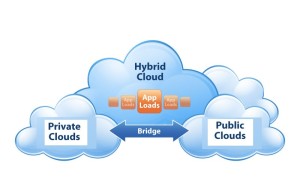
Cloud computing involves the delivery of IT resources using a network of remote servers. Data is stored, managed, and processed by a cloud vendor rather than using a local server or PC. The use of cloud computing is growing, and is expected to continue to develop over the next few years. There are many reasons you should be using cloud computing services.

Business in general and startups in particular should practice the inexorable pursuit of cost savings. Cloud computing has that potential. It is actually a superior option for startups because, typically, no prior substantial investments in hardware and software have been made.
Project Natick capsules put data center servers underwater for five years at a time.
Microsoft Research has a new concept that could bring data centers powering cloud services closer to roughly half of the world’s population. All it requires is a custom submarine capsule designed to go five years at a time without a visit from a technician.
The company’s R&D department recently went public with Project Natick, a data center enclosed in a steel capsule that sits on the ocean floor.



Follow me on Social Media